What Causes Sudden Vision Loss In One Eye
What Causes Sudden Vision Loss In One Eye?
Experiencing sudden vision loss in one eye is undoubtedly frightening. Whether it's a complete blackout, a shroud descending over your vision, or a partial loss of sight, this symptom is a serious medical emergency that demands immediate attention. It's natural to panic and wonder, What Causes Sudden Vision Loss In One Eye? Understanding the potential culprits can help you communicate effectively with healthcare professionals and grasp the urgency of your situation.
We are going to walk through the most common and critical reasons behind this sudden change. Remember, while this article offers valuable information, it is not a substitute for professional medical advice. If you are currently experiencing this symptom, stop reading and call emergency services immediately.
This Is an Emergency: Why You Must Act Fast
The severity of sudden vision loss stems from the fact that many underlying causes involve blood flow restriction or nerve damage. Just like a stroke in the brain, the eye's delicate tissues—especially the retina and optic nerve—cannot survive long without oxygenated blood.
Often, the difference between recovering some vision and suffering permanent loss is measured in hours, or even minutes. Therefore, if you experience sudden, painless loss of sight in one eye, consider it an ocular stroke until proven otherwise. Time is crucial for diagnosis and treatment.
Vascular Causes: When Blood Flow Is Blocked
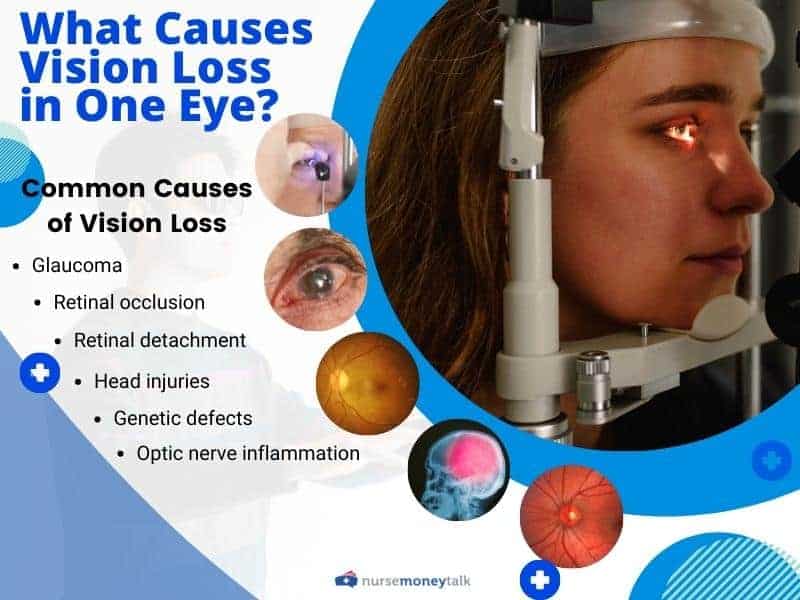
One of the primary answers to What Causes Sudden Vision Loss In One Eye relates directly to problems with the blood vessels supplying the retina. The retina is the light-sensitive tissue at the back of the eye, and it requires a constant supply of fresh blood to function.
Retinal Artery Occlusion (Eye Stroke)
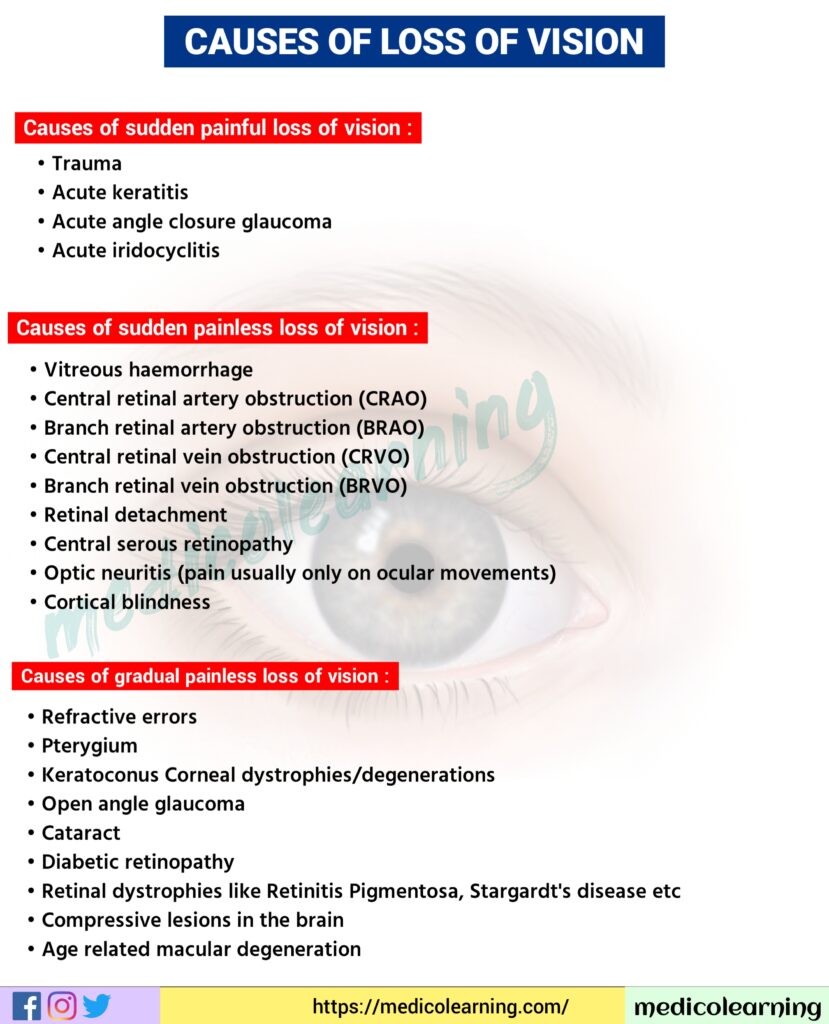
A central retinal artery occlusion (CRAO) or branch retinal artery occlusion (BRAO) happens when a small clot or plaque (embolus) blocks the artery supplying blood to the retina. This is essentially a stroke of the eye. Vision loss is usually profound, painless, and sudden.
When the entire central artery is blocked, the loss of sight is typically total in that eye. If only a branch is blocked, the vision loss affects only the field of vision supplied by that branch. High blood pressure, high cholesterol, and heart disease are significant risk factors for this severe condition.
Retinal Vein Occlusion
A retinal vein occlusion (RVO) occurs when a vein responsible for draining blood from the retina becomes blocked, often due to thickening arteries pressing on the veins. This blockage causes blood and fluid to back up, leading to retinal swelling (edema) and bleeding.
Unlike artery occlusion, RVO vision loss is often less instantaneous and can be gradual over hours or days. However, it can still present as a sudden, noticeable drop in vision. This is often associated with glaucoma, high blood pressure, and diabetes.
Giant Cell Arteritis (GCA)
GCA is a serious inflammatory condition that affects medium and large arteries, including those supplying the optic nerve. It causes inflammation and swelling of the blood vessels, severely restricting blood flow. Vision loss from GCA is typically permanent and often involves the optic nerve (arteritic anterior ischemic optic neuropathy).
GCA is usually accompanied by systemic symptoms, differentiating it from purely ocular issues. These symptoms include:
- Severe headache, often around the temples.
- Scalp tenderness.
- Jaw pain while chewing (jaw claudication).
- Unexplained fever and weight loss.
Because GCA can quickly lead to blindness in the second eye, immediate high-dose steroid treatment is necessary if GCA is suspected.
Ocular Conditions: Problems Inside the Eye Structure
Sometimes the cause of sudden sight loss lies not in the blood vessels, but in structural damage or inflammation within the eye itself. These conditions also require urgent medical assessment to prevent lasting damage.
Retinal Detachment
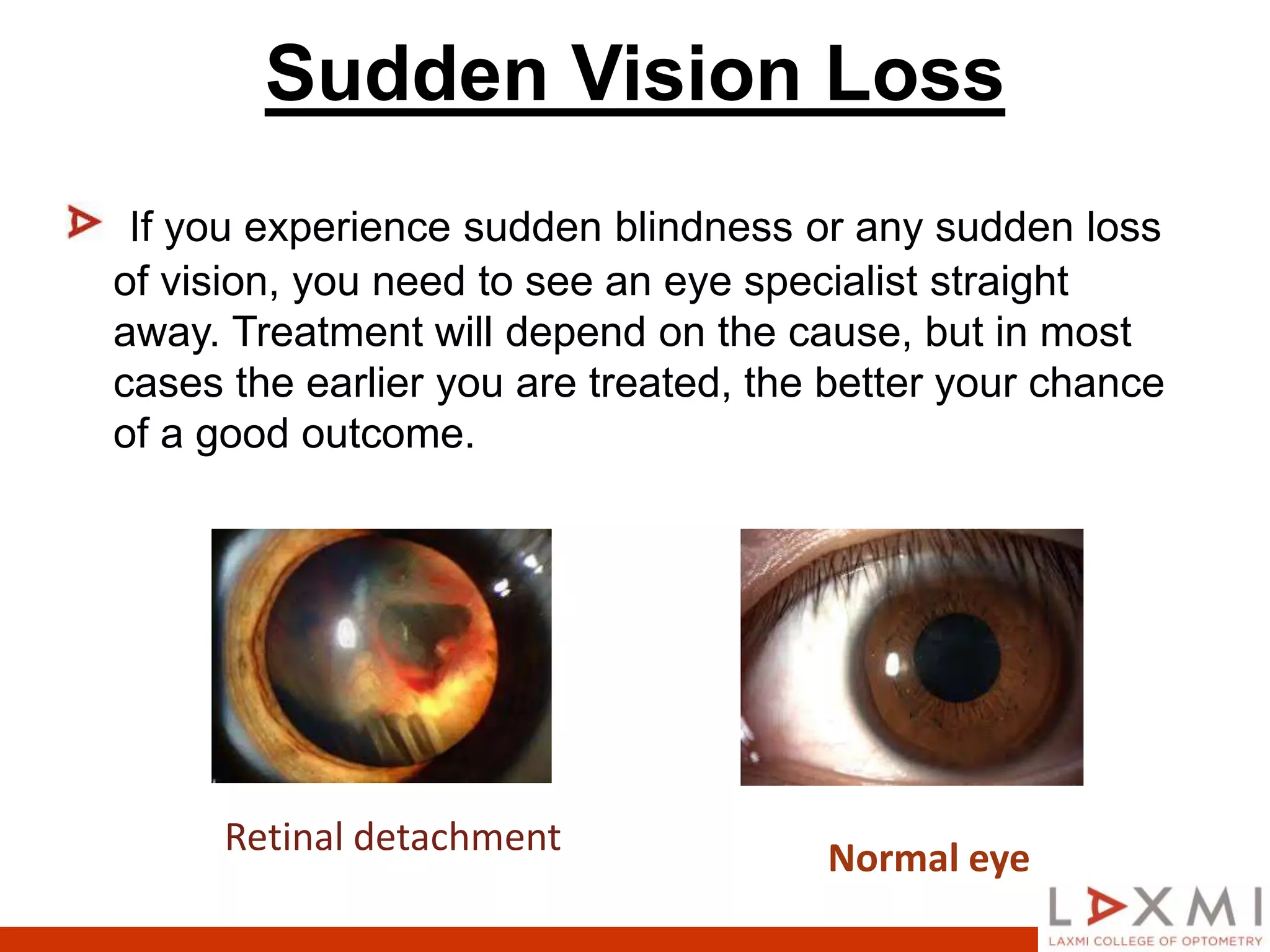
The retina peeling away from the underlying supportive tissue is called a retinal detachment. This is a very serious condition because once separated, the retina loses its blood and nutrient supply, causing permanent vision loss if not reattached quickly.
Often, prior to the detachment, people notice symptoms like new floaters (dark spots) and flashes of light. When the detachment occurs, vision loss may feel like a curtain or shadow has been pulled across part or all of their visual field. This is a surgical emergency.
Vitreous Hemorrhage
The vitreous is the clear, jelly-like substance that fills the center of the eye. A vitreous hemorrhage occurs when blood leaks into this cavity, usually due to fragile, leaky vessels (common in advanced diabetes) or a tear in the retina. The blood physically blocks light from reaching the retina.
The degree of vision loss depends on the amount of blood present. A small bleed might cause new floaters or haziness, while a large hemorrhage can cause significant and sudden loss of vision in that one eye. While not always immediately permanent, the underlying cause, such as a retinal tear, must be addressed quickly.
Optic Nerve Issues (Optic Neuritis)
The optic nerve transmits visual information from the retina to the brain. Optic neuritis is inflammation of this nerve. This condition is a frequent presenting symptom of multiple sclerosis (MS), though it can also be caused by infections or other autoimmune diseases.
Vision loss from optic neuritis usually develops rapidly over several hours or days, rather than instantaneously. Unlike many vascular causes, optic neuritis is often accompanied by eye pain, especially when moving the eye. While vision may recover spontaneously, treatment is often used to speed up recovery and reduce swelling.
Transient Causes: When Vision Returns Quickly
In some cases, the vision loss may be sudden but temporary, returning completely after a few minutes. While temporary relief is welcome, this is not a sign that everything is okay. Transient vision loss is a crucial warning sign of serious impending vascular problems.
Amaurosis Fugax (Temporary Blindness)
Amaurosis fugax, often described as a curtain coming down and then lifting, is a brief episode of temporary blindness in one eye. It typically lasts from seconds to a few minutes. This symptom is often caused by a tiny embolus (a piece of cholesterol or clot) traveling from the carotid artery in the neck or the heart, which briefly blocks blood flow to the retina.
Think of amaurosis fugax as a "mini-stroke" of the eye. Although the vision returns, it signals that you are at high risk for a full-blown stroke or permanent retinal artery occlusion. Diagnostic tests are necessary immediately to check the neck arteries and heart for plaque or clots.
Who is at Risk for Sudden Vision Loss In One Eye?
While sudden vision loss can affect anyone, certain pre-existing conditions significantly increase the risk, primarily those affecting the circulatory system:
- Uncontrolled high blood pressure (hypertension).
- Diabetes, especially if poorly managed.
- High cholesterol levels (hyperlipidemia).
- Smoking and excessive alcohol consumption.
- Existing cardiovascular disease or history of stroke/TIA.
- Age, particularly those over 50 (especially for GCA).
- Pre-existing glaucoma or severe myopia (risk factor for retinal detachment).
Conclusion
The question, What Causes Sudden Vision Loss In One Eye, has many potential answers, ranging from localized issues like retinal detachment to life-threatening systemic conditions like Giant Cell Arteritis or impending stroke. The common thread among almost all serious causes is the need for speed.
If you or someone you know experiences sudden vision loss in one eye, regardless of whether it is painless or painful, partial or total, seek immediate emergency medical care. Swift action provides the best chance of saving your eyesight and detecting underlying conditions that could threaten your overall health.
Frequently Asked Questions (FAQ)
- What should I do immediately if I experience sudden vision loss in one eye?
- Call emergency services or go to the nearest emergency room immediately. Do not wait to see if it improves, as the window for treatment for conditions like retinal artery occlusion is very short.
- Is sudden vision loss in one eye always permanent?
- No, it is not always permanent. Conditions like vitreous hemorrhage or optic neuritis often show improvement with treatment. However, vascular events like CRAO or retinal detachment carry a high risk of permanent vision loss if not treated urgently.
- Can stress or anxiety cause sudden vision loss?
- While extreme stress or anxiety can sometimes cause temporary visual disturbances (such as tunnel vision or a short migraine aura), these causes are rare and usually harmless. Nonetheless, assume the worst and seek urgent medical evaluation to rule out dangerous organic causes before attributing the symptoms to stress.
- If my vision loss was temporary (Amaurosis Fugax), am I still at risk?
- Absolutely. Amaurosis fugax is a major warning sign, indicating that a blockage originated elsewhere in your body and passed through the eye's circulation. You are at high risk for a future, potentially permanent stroke (either ocular or cerebral) and require immediate diagnostic testing to identify the source of the clot.
What Causes Sudden Vision Loss In One Eye
What Causes Sudden Vision Loss In One Eye Wallpapers
Collection of what causes sudden vision loss in one eye wallpapers for your desktop and mobile devices.

Artistic What Causes Sudden Vision Loss In One Eye Picture for Your Screen
A captivating what causes sudden vision loss in one eye scene that brings tranquility and beauty to any device.
:max_bytes(150000):strip_icc()/Vision-loss-5094948_final_rev-26afd3587fe24102a93a38f6e622e7dc.jpg "Dynamic What Causes Sudden Vision Loss In One Eye Artwork in 4K")
Dynamic What Causes Sudden Vision Loss In One Eye Artwork in 4K
This gorgeous what causes sudden vision loss in one eye photo offers a breathtaking view, making it a perfect choice for your next wallpaper.
Amazing What Causes Sudden Vision Loss In One Eye Landscape for Desktop
Explore this high-quality what causes sudden vision loss in one eye image, perfect for enhancing your desktop or mobile wallpaper.
Vivid What Causes Sudden Vision Loss In One Eye Capture in 4K
Explore this high-quality what causes sudden vision loss in one eye image, perfect for enhancing your desktop or mobile wallpaper.

Dynamic What Causes Sudden Vision Loss In One Eye Landscape Concept
Find inspiration with this unique what causes sudden vision loss in one eye illustration, crafted to provide a fresh look for your background.

Detailed What Causes Sudden Vision Loss In One Eye Photo in 4K
Experience the crisp clarity of this stunning what causes sudden vision loss in one eye image, available in high resolution for all your screens.

Gorgeous What Causes Sudden Vision Loss In One Eye Design for Your Screen
A captivating what causes sudden vision loss in one eye scene that brings tranquility and beauty to any device.

Vibrant What Causes Sudden Vision Loss In One Eye Wallpaper in 4K
Discover an amazing what causes sudden vision loss in one eye background image, ideal for personalizing your devices with vibrant colors and intricate designs.
Gorgeous What Causes Sudden Vision Loss In One Eye Abstract for Desktop
Immerse yourself in the stunning details of this beautiful what causes sudden vision loss in one eye wallpaper, designed for a captivating visual experience.
High-Quality What Causes Sudden Vision Loss In One Eye Design in HD
Transform your screen with this vivid what causes sudden vision loss in one eye artwork, a true masterpiece of digital design.

Lush What Causes Sudden Vision Loss In One Eye Wallpaper Illustration
This gorgeous what causes sudden vision loss in one eye photo offers a breathtaking view, making it a perfect choice for your next wallpaper.

Artistic What Causes Sudden Vision Loss In One Eye Capture for Your Screen
Immerse yourself in the stunning details of this beautiful what causes sudden vision loss in one eye wallpaper, designed for a captivating visual experience.

Vibrant What Causes Sudden Vision Loss In One Eye Capture for Mobile
Explore this high-quality what causes sudden vision loss in one eye image, perfect for enhancing your desktop or mobile wallpaper.
Mesmerizing What Causes Sudden Vision Loss In One Eye View for Desktop
Discover an amazing what causes sudden vision loss in one eye background image, ideal for personalizing your devices with vibrant colors and intricate designs.

Lush What Causes Sudden Vision Loss In One Eye Moment for Your Screen
A captivating what causes sudden vision loss in one eye scene that brings tranquility and beauty to any device.

Mesmerizing What Causes Sudden Vision Loss In One Eye Abstract Illustration
Explore this high-quality what causes sudden vision loss in one eye image, perfect for enhancing your desktop or mobile wallpaper.
Serene What Causes Sudden Vision Loss In One Eye Design in HD
Explore this high-quality what causes sudden vision loss in one eye image, perfect for enhancing your desktop or mobile wallpaper.

Artistic What Causes Sudden Vision Loss In One Eye Photo Nature
Find inspiration with this unique what causes sudden vision loss in one eye illustration, crafted to provide a fresh look for your background.

Gorgeous What Causes Sudden Vision Loss In One Eye View for Mobile
A captivating what causes sudden vision loss in one eye scene that brings tranquility and beauty to any device.

0 Response to "What Causes Sudden Vision Loss In One Eye"
Post a Comment