Bcva Eye
Decoding BCVA Eye: What Best Corrected Visual Acuity Means for Your Sight
If you have ever visited an eye doctor, you've likely encountered a battery of tests designed to measure how well you see. One of the most crucial measurements taken is the Bcva Eye score, or Best Corrected Visual Acuity. While the term sounds clinical, understanding your BCVA is essential because it tells your doctor the absolute best vision you can achieve with the aid of glasses or contact lenses.
You might be wondering: what exactly does this measurement involve, and why does it matter more than just reading the eye chart without correction? This comprehensive guide will walk you through everything you need to know about BCVA, how it's measured, and what the results mean for the health of your eyes.
What Exactly is BCVA Eye?
BCVA stands for Best Corrected Visual Acuity. In simple terms, it is a measure of the sharpest, clearest vision you can possibly achieve when you are using the most accurate prescription available to you. Think of it as your eye's maximum potential for seeing detail.
This measurement is not static; it changes depending on the refractive error in your eye (like nearsightedness or farsightedness) and whether those errors are adequately corrected. If your BCVA is good, it means that even if your natural vision is blurry, corrective lenses can help you achieve near-perfect sight.
The Difference: BCVA vs. UCVA
When discussing your vision, doctors often use two acronyms: BCVA and UCVA. It is important to know the distinction between the two to fully grasp the importance of the BCVA measurement.
UCVA stands for Uncorrected Visual Acuity. This is simply how well you can see without any glasses, contact lenses, or other visual aids. For many people, especially those with significant refractive errors, the UCVA score will be quite low.
In contrast, BCVA measures your sight after the best possible correction has been applied. If your UCVA is 20/200 (meaning you need to stand 20 feet away to see what a person with normal vision sees at 200 feet), but your BCVA is 20/20, your eye doctor knows your vision problem is likely just a simple refractive error that is easily fixed.
How Is BCVA Eye Measured? The Eye Chart Experience
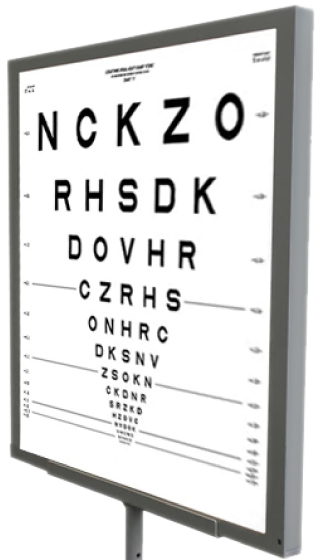
The measurement of your Bcva Eye involves the familiar eye chart, usually a Snellen chart, placed 20 feet away. The process is straightforward, but precision is key to getting an accurate reading.
First, your eye doctor performs a refraction test. This is where you look through a device called a phoropter and tell the doctor which lens makes the letters look clearer—"Is A or B better?" This process determines your ideal prescription.
Once the best prescription is determined, whether through trial frames or a phoropter, the doctor then asks you to read the smallest line possible on the chart. The smallest line you can comfortably read is recorded as your BCVA score.
Understanding the Snellen Fraction
BCVA results are expressed as a fraction, such as 20/20 or 20/40. The top number represents the standard testing distance (usually 20 feet in the U.S.). The bottom number indicates the distance at which a person with normal vision could read that same line.
Here's a quick breakdown of what these numbers signify:
- 20/20 Vision: This is considered "normal" visual acuity. It means you see at 20 feet what the average person sees at 20 feet.
- 20/40 Vision: This means you must stand 20 feet away to see something clearly that a person with normal vision can see clearly at 40 feet.
- 20/10 Vision: This is considered excellent visual acuity, better than average.
Achieving a BCVA of 20/20 is the goal for most patients, as it indicates excellent function of the eye's focusing mechanisms when corrected.
The Role of Refraction
Refraction is the critical step that defines the "Best Corrected" part of BCVA. Refraction determines exactly how light needs to be bent before it hits your retina for the clearest image possible. This is where the skill of your optometrist or ophthalmologist truly shines.
Without an accurate refraction, your BCVA measurement would simply be a guess. This precise lens determination ensures that if there are any correctable errors (myopia, hyperopia, or astigmatism), they are accounted for, isolating any other underlying medical issues that might be hindering your sight.
Why Is BCVA Eye So Important for Diagnosis?
BCVA is more than just a measurement for prescribing glasses; it is a fundamental diagnostic tool used by eye care professionals worldwide. It helps distinguish between vision problems that are minor and those that signal serious eye disease.
If a patient's vision cannot be corrected to 20/20, or even 20/30, despite having the perfect prescription, the doctor knows that the issue is not simply a focusing error. Instead, the blurriness must be caused by a physical problem within the eye or the visual pathway to the brain.
Screening for Common Eye Conditions
A reduced BCVA score often acts as an early warning sign, prompting further investigation. When corrective lenses don't help, eye doctors immediately start looking for structural or disease-related issues. This is crucial for early detection, which can save your sight.
Conditions frequently indicated by a low BCVA include:
- Cataracts: Clouding of the natural lens prevents light from passing through clearly, reducing sharpness even with correction.
- Macular Degeneration: Damage to the central part of the retina reduces the ability to see fine detail.
- Glaucoma: While often affecting peripheral vision first, advanced glaucoma can drastically lower BCVA.
- Diabetic Retinopathy: Damage to blood vessels in the retina, common in diabetics, impairs central vision.
Monitoring Treatment Progress
BCVA is not just for initial diagnosis; it is vital for tracking how well treatments are working. For instance, after cataract surgery, the surgeon will measure the patient's BCVA to quantify the success of the procedure. A significant improvement in the BCVA Eye score confirms that the surgery restored visual clarity.
Similarly, for patients undergoing treatment for conditions like macular degeneration, regular BCVA testing helps doctors determine if the disease is stable, progressing, or responding positively to injections or medication. It provides a quantifiable, objective measure of your visual health status.
What Does a "Poor" BCVA Eye Score Indicate?
If your BCVA falls below 20/40, or if it declines steadily over time, this is often a sign of underlying pathology that requires immediate attention. A "poor" BCVA means that even with the ideal prescription, your eye structure is preventing clear vision.
It's important to differentiate temporary dips in vision (due to fatigue or dryness) from a sustained reduction in Bcva Eye. If the doctor confirms that maximum correction still results in poor acuity, they will initiate a workup focusing on the health of the retina, optic nerve, and cornea.
When Vision Cannot Be Corrected
In cases where vision remains severely limited despite correction, doctors use BCVA to classify the severity of the visual impairment. This is particularly relevant when assessing patients for low vision services or determining eligibility for certain government benefits.
It can be a difficult diagnosis, but knowing the precise BCVA allows patients and practitioners to set realistic expectations for rehabilitation and utilize specialized tools designed for low-vision assistance.
Legal Blindness Explained
The standard definition of legal blindness in many countries relies heavily on the BCVA score. Typically, a person is considered legally blind if their BCVA is 20/200 or worse in the better eye, even with the best possible correction.
This threshold is crucial for accessing services and support tailored to severe visual impairment. While 20/200 vision still allows some sight, the level of function is severely limited, impacting daily activities like driving and reading.
Conclusion: Prioritizing Your BCVA Eye Score
Understanding your Bcva Eye score is fundamental to taking charge of your eye health. This measurement serves as the gold standard for determining the true capacity of your vision when all refractive errors are accounted for.
If your BCVA is 20/20, you know your eyes are functioning optimally. If your score is lower, it acts as a critical alarm, prompting further investigation to catch serious eye diseases like cataracts or macular degeneration in their earliest, most treatable stages. Always discuss your BCVA results openly with your eye care professional during your annual exams; it is the most important number in assessing the quality of your sight.
Frequently Asked Questions About BCVA Eye
- What is considered a "good" BCVA score?
- A BCVA score of 20/20 is generally considered excellent or normal. Anything 20/30 or better is usually considered acceptable for most daily activities, but 20/20 remains the gold standard for full visual acuity potential.
- Can my BCVA improve?
- Yes, if the reduction in your BCVA is caused by a treatable condition. For example, BCVA will significantly improve after a successful cataract surgery, or if an underlying refractive error was previously under-corrected.
- Is BCVA measured differently for children?
- The principle of Best Corrected Visual Acuity remains the same, but the method might differ. Children who cannot read the traditional Snellen chart may use specialized charts showing pictures (like LEA symbols) or tests that assess fixation and following behavior.
- How often should I have my BCVA measured?
- BCVA is measured during every comprehensive eye examination. Adults should generally have an exam every one to two years, depending on age and risk factors (like diabetes or family history of eye disease).
Bcva Eye
Bcva Eye Wallpapers
Collection of bcva eye wallpapers for your desktop and mobile devices.

Spectacular Bcva Eye Picture Collection
This gorgeous bcva eye photo offers a breathtaking view, making it a perfect choice for your next wallpaper.

Lush Bcva Eye Image Illustration
A captivating bcva eye scene that brings tranquility and beauty to any device.

Exquisite Bcva Eye Picture Photography
Find inspiration with this unique bcva eye illustration, crafted to provide a fresh look for your background.
Amazing Bcva Eye Moment for Desktop
Discover an amazing bcva eye background image, ideal for personalizing your devices with vibrant colors and intricate designs.

Mesmerizing Bcva Eye Landscape Collection
Explore this high-quality bcva eye image, perfect for enhancing your desktop or mobile wallpaper.

High-Quality Bcva Eye Design in HD
Explore this high-quality bcva eye image, perfect for enhancing your desktop or mobile wallpaper.

Dynamic Bcva Eye Photo Collection
This gorgeous bcva eye photo offers a breathtaking view, making it a perfect choice for your next wallpaper.

Lush Bcva Eye Background Digital Art
Immerse yourself in the stunning details of this beautiful bcva eye wallpaper, designed for a captivating visual experience.

Exquisite Bcva Eye Picture Concept
A captivating bcva eye scene that brings tranquility and beauty to any device.

Vivid Bcva Eye View in 4K
Transform your screen with this vivid bcva eye artwork, a true masterpiece of digital design.

Detailed Bcva Eye View in 4K
Experience the crisp clarity of this stunning bcva eye image, available in high resolution for all your screens.
Exquisite Bcva Eye Scene Nature
Find inspiration with this unique bcva eye illustration, crafted to provide a fresh look for your background.

Stunning Bcva Eye Landscape Illustration
This gorgeous bcva eye photo offers a breathtaking view, making it a perfect choice for your next wallpaper.

Exquisite Bcva Eye Image Nature
Immerse yourself in the stunning details of this beautiful bcva eye wallpaper, designed for a captivating visual experience.

Spectacular Bcva Eye Capture in 4K
Find inspiration with this unique bcva eye illustration, crafted to provide a fresh look for your background.

Crisp Bcva Eye Scene Digital Art
This gorgeous bcva eye photo offers a breathtaking view, making it a perfect choice for your next wallpaper.

Gorgeous Bcva Eye Scene Concept
Find inspiration with this unique bcva eye illustration, crafted to provide a fresh look for your background.

Vivid Bcva Eye Wallpaper for Your Screen
Explore this high-quality bcva eye image, perfect for enhancing your desktop or mobile wallpaper.

0 Response to "Bcva Eye"
Post a Comment