Eye Axis
Understanding Your Vision: Everything You Need to Know About the Eye Axis
If you've recently had an eye exam, you might have glanced at your prescription slip and noticed some intimidating numbers, especially the term "Axis." Don't worry, you're not alone if you feel confused! This little measurement holds the key to sharp, clear vision, particularly if you have astigmatism. Far from being a complicated medical mystery, the Eye Axis is simply a mapping tool that tells your eye doctor exactly how to position your corrective lenses.
In this comprehensive, yet easy-to-understand guide, we're going to break down what the Eye Axis is, why it matters so much, and how understanding this measurement can help you see the world more clearly. Think of us as your personal vision decoder!
What Exactly is the Eye Axis?
The term "Eye Axis" refers to the orientation of the cylinder power required to correct astigmatism. To visualize this, imagine the front of your eye (the cornea) is a globe. In a perfectly spherical eye, light focuses precisely on one spot on the retina. But when you have astigmatism, your cornea is shaped more like a football or the back of a spoon, causing light to focus unevenly.
The Eye Axis defines the precise angle (measured in degrees) where the steepest or flattest curvature of this irregularly shaped cornea occurs. This measurement is crucial because your corrective lens needs to counteract that specific angle of distortion.
If you wear glasses or contact lenses, the Axis measurement ensures the compensating curve in your prescription lens is lined up perfectly with the curve causing the vision issue in your eye. If the lens is rotated even slightly off the correct axis, your vision will remain blurred or distorted.
The Critical Role of the Eye Axis in Astigmatism
Astigmatism is an extremely common refractive error, and it is the primary reason the Eye Axis measurement exists on your prescription. Without astigmatism, you would only have sphere (SPH) and potentially power (ADD) numbers, but no Cylinder (CYL) or Axis.
When light hits an astigmatic eye, it bends differently in different meridians (or axes). This results in images appearing stretched, wavy, or blurred at any distance. The cylinder power listed on your prescription indicates how strong the corrective lens needs to be to fix this uneven bending of light.
But that cylinder power is useless unless we know exactly where to put it. That's where the Eye Axis steps in, providing the necessary directional map. If your doctor prescribes -1.00 CYL, the Axis tells them exactly which angle—say, 90 degrees—that correction needs to be applied.
Decoding the Numbers: How the Eye Axis is Measured
The Eye Axis is always recorded as a number between 1 and 180 degrees. This system is standardized across all eye care professionals, making it easy to translate the prescription, regardless of where you get your eyes checked.
Think of it like a protractor laid over your eye. Zero degrees (which is often listed as 180) represents the horizontal plane, while 90 degrees represents the vertical plane. All other angles fall somewhere in between.
The measurement is determined during your eye exam using special instruments like a keratometer or an autorefractor, and then fine-tuned through a process called refraction, where your doctor asks, "Which is clearer: option one or option two?"
Here's a simple way to think about the degree system:
- **180 (or 0) Degrees:** Indicates that the curvature issue is horizontal.
- **90 Degrees:** Indicates that the curvature issue is vertical.
- **Oblique Axes (e.g., 45, 135):** Indicates that the curvature issue is diagonal.
Because the cornea is a dynamic surface, the Axis measurement must be highly precise. Even a five- or ten-degree shift in the prescribed Eye Axis can make the difference between crystal clear vision and feeling like you're looking through a funhouse mirror.
Why Does the Eye Axis Matter for Your Glasses and Contacts?
When you get a new pair of glasses, the lab uses the cylinder and Eye Axis information to grind the corrective curve into the lens precisely where it needs to be. For glasses, once the lens is fixed in the frame, the orientation is permanent.
However, the Axis is even more critical when it comes to contact lenses, specifically Toric lenses. Standard contact lenses are spherical and rotate freely on the eye. If you have astigmatism, this free rotation is a massive problem because the corrective cylinder must remain stable and aligned with your personal Eye Axis.
Toric lenses are engineered with weighted bottoms or thinner edges that interact with your eyelids to prevent rotation. This mechanism is called stabilization. If your Toric contact lens slips out of alignment with the required Eye Axis, your vision will suddenly become blurry until the lens rotates back into place.
That is why, if you notice fluctuating blurriness with your contacts, you should immediately discuss the stability of your toric lens fit with your optometrist. It might indicate that the lens is not stabilizing correctly on your particular Eye Axis.
How Doctors Address Issues Related to the Eye Axis
Correcting issues related to the Eye Axis typically involves ensuring the corrective power is aligned perfectly. For most people, this means using specialized lenses. However, there are surgical solutions available for those seeking a permanent fix.
Your doctor's treatment approach will depend on the severity of your astigmatism and your lifestyle needs. It's always best to have a thorough discussion about the pros and cons of each option.
Common corrective measures include:
- **Toric Contact Lenses:** These soft or rigid gas permeable (RGP) lenses are designed specifically to remain stable and aligned with the required axis measurement on the eye, providing consistent clarity.
- **Glasses with Cylinder Correction:** As discussed, prescription glasses incorporate the Axis directly into the lens grinding process. They offer stable, non-rotating correction.
- **LASIK or PRK Surgery:** Refractive surgery can reshape the cornea itself, essentially eliminating the irregular curvature causing the astigmatism. This procedure measures and corrects the Eye Axis permanently.
- **Toric Intraocular Lenses (IOLs):** Used during cataract surgery, these special implants are carefully positioned inside the eye to neutralize existing astigmatism, removing the need for glasses correction for the axis.
Living with an Adjusted Eye Axis: Tips and Tricks
If you wear toric contacts, you might experience minor fluctuations in vision, especially if you rub your eyes or blink hard. However, there are things you can do to ensure maximum comfort and clarity.
The key to wearing toric lenses successfully is maintaining the correct alignment, which means taking care of your lenses and consulting with your doctor regularly. Here are a few tips for daily life:
- **Give Lenses Time to Settle:** When you first put in a toric lens, it might feel blurry for a minute or two. Give it time to stabilize and align with your Eye Axis naturally before panicking.
- **Avoid Excessive Rubbing:** Rubbing your eyes can easily spin a toric lens out of its corrected axis. If your eyes are irritated, use lubricating drops instead.
- **Regular Follow-Ups:** Astigmatism, and thus the required Axis, can change slowly over time. Annual check-ups are essential to ensure your prescription is still perfectly tuned to your needs.
- **Check for Rotation Marks:** If you suspect your contacts are rotating incorrectly, ask your optometrist to show you the tiny etch marks or lines on your toric lenses. These marks help them verify if the lens is sitting on the correct axis when you look straight ahead.
Conclusion
The Eye Axis might seem like a small detail buried in your eye prescription, but it is fundamentally important for anyone dealing with astigmatism. This specific measurement—the angle between 1 and 180 degrees—is the roadmap that allows corrective lenses to neutralize the visual distortion caused by an irregular corneal shape.
Understanding the role of the Eye Axis empowers you to discuss your prescription confidently with your doctor and ensures that when you purchase new eyewear, you receive the highest quality of vision correction possible. If your vision feels off, always start by confirming that the cylinder power and the axis measurement are perfectly matched to your eyes.
Frequently Asked Questions (FAQ) About the Eye Axis
- What happens if my Eye Axis is wrong?
- If your corrective lenses (glasses or contacts) are made with an incorrect Eye Axis, you will experience significantly blurry or distorted vision. Even a slight misalignment can cause headaches and eye strain because the lens is correcting the astigmatism in the wrong orientation.
- Does the Eye Axis change over time?
- For most adults, the Eye Axis measurement remains relatively stable. However, in children and teenagers, it can shift as the eye develops. It can also change in adults due to certain eye diseases or after eye surgery. Regular eye exams ensure any subtle changes are caught and corrected.
- Is the Axis number the same for both eyes?
- Not usually. Since each eye is unique, the curvature of the corneas is rarely identical. Therefore, the required sphere, cylinder, and Eye Axis measurements for your right eye (OD) and left eye (OS) are typically different.
- Why don't people without astigmatism have an Axis on their prescription?
- The Eye Axis (and the CYL number) is only required to correct astigmatism. If you only have nearsightedness (myopia) or farsightedness (hyperopia), your cornea is spherical enough that no directional correction is needed. In that case, the Axis box will be left blank or simply marked 'SPH'.
Eye Axis
Eye Axis Wallpapers
Collection of eye axis wallpapers for your desktop and mobile devices.
:max_bytes(150000):strip_icc()/GettyImages-553394069-59a34f61d963ac001178667d.jpg "Vivid Eye Axis Design Nature")
Vivid Eye Axis Design Nature
Explore this high-quality eye axis image, perfect for enhancing your desktop or mobile wallpaper.

High-Quality Eye Axis Wallpaper Illustration
Explore this high-quality eye axis image, perfect for enhancing your desktop or mobile wallpaper.

Detailed Eye Axis Photo Illustration
Experience the crisp clarity of this stunning eye axis image, available in high resolution for all your screens.

High-Quality Eye Axis Landscape for Mobile
Explore this high-quality eye axis image, perfect for enhancing your desktop or mobile wallpaper.
Detailed Eye Axis Wallpaper Photography
Experience the crisp clarity of this stunning eye axis image, available in high resolution for all your screens.

Lush Eye Axis Design Collection
A captivating eye axis scene that brings tranquility and beauty to any device.
/GettyImages-1176128997-50151a347f6645e98e944a7b55fba595.jpg "Breathtaking Eye Axis Capture Photography")
Breathtaking Eye Axis Capture Photography
Transform your screen with this vivid eye axis artwork, a true masterpiece of digital design.

Detailed Eye Axis Landscape in HD
Discover an amazing eye axis background image, ideal for personalizing your devices with vibrant colors and intricate designs.

Dynamic Eye Axis View Concept
Find inspiration with this unique eye axis illustration, crafted to provide a fresh look for your background.

Spectacular Eye Axis Picture Illustration
Immerse yourself in the stunning details of this beautiful eye axis wallpaper, designed for a captivating visual experience.
Mesmerizing Eye Axis Artwork Photography
Explore this high-quality eye axis image, perfect for enhancing your desktop or mobile wallpaper.

Vibrant Eye Axis Moment Concept
Explore this high-quality eye axis image, perfect for enhancing your desktop or mobile wallpaper.

Beautiful Eye Axis Scene Digital Art
Discover an amazing eye axis background image, ideal for personalizing your devices with vibrant colors and intricate designs.
Mesmerizing Eye Axis Wallpaper in 4K
Discover an amazing eye axis background image, ideal for personalizing your devices with vibrant colors and intricate designs.
Serene Eye Axis Picture Concept
Transform your screen with this vivid eye axis artwork, a true masterpiece of digital design.

Stunning Eye Axis Abstract for Your Screen
Immerse yourself in the stunning details of this beautiful eye axis wallpaper, designed for a captivating visual experience.
/GettyImages-695204442-b9320f82932c49bcac765167b95f4af6.jpg "Exquisite Eye Axis Scene Art")
Exquisite Eye Axis Scene Art
This gorgeous eye axis photo offers a breathtaking view, making it a perfect choice for your next wallpaper.

Vivid Eye Axis View Art
Experience the crisp clarity of this stunning eye axis image, available in high resolution for all your screens.

Serene Eye Axis Capture Art
Discover an amazing eye axis background image, ideal for personalizing your devices with vibrant colors and intricate designs.
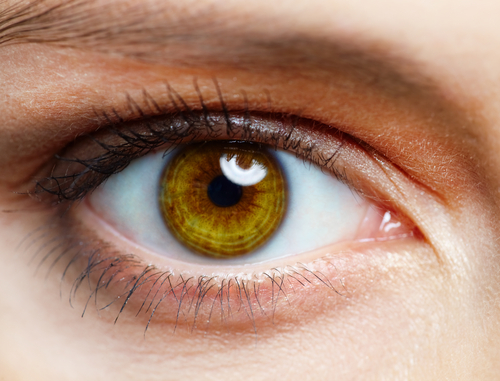
Captivating Eye Axis Picture in 4K
A captivating eye axis scene that brings tranquility and beauty to any device.
Download these eye axis wallpapers for free and use them on your desktop or mobile devices.
0 Response to "Eye Axis"
Post a Comment